Do you love the tree-lined blocks around Cheesman Park but feel unsure how to tell a Denver Square from a Tudor at a glance? You are not alone. Many buyers and homeowners want historic character, yet worry about what is original, what was updated, and what might cost them later. This quick guide shows you how to identify the four classic styles you see in Cheesman Park, what quality updates look like, and the inspections that matter so you can move forward with confidence. Let’s dive in.
Why Cheesman Park homes stand out
Cheesman Park and the nearby Capitol Hill area grew rapidly from the 1890s through the 1930s. That period produced the iconic mix you see today: Denver Squares, Craftsman bungalows, Tudor Revival houses, and Mediterranean or Spanish Revival homes.
Lots are often narrow and deep, with front porches and terraces that define the streetscape. Inside, you can find original hardwood floors, plaster walls, and built-ins, along with patchwork updates from later decades. Older construction can mean more complex maintenance, including older wiring or original windows that require skilled repair.
Denver Square: quick ID and tips
How to spot it
- Boxy two-story form with a low-pitched hipped roof, often with a central dormer.
- Symmetrical front with paired windows and a full-width or recessed porch.
- Simple ornament, sometimes modest brackets or a defined cornice.
Inside layout cues
- Four-room logic per floor with a central hall and stair.
- Formal living and dining rooms, tall ceilings around 9 to 10 feet.
- Substantial window and door trim, and original woodwork.
Materials to expect
- Brick, clapboard, or stucco exteriors depending on the era.
- Original wood windows and occasional built-ins.
What to check on inspection
- Roof hips and dormer flashing for leaks or wear.
- Porch foundations or columns for settlement.
- Floor squeaks that can hint at joist or subfloor issues.
- Presence of plaster vs. later drywall, and whether wiring and insulation have been updated.
Craftsman/Bungalow: features and checks
How to spot it
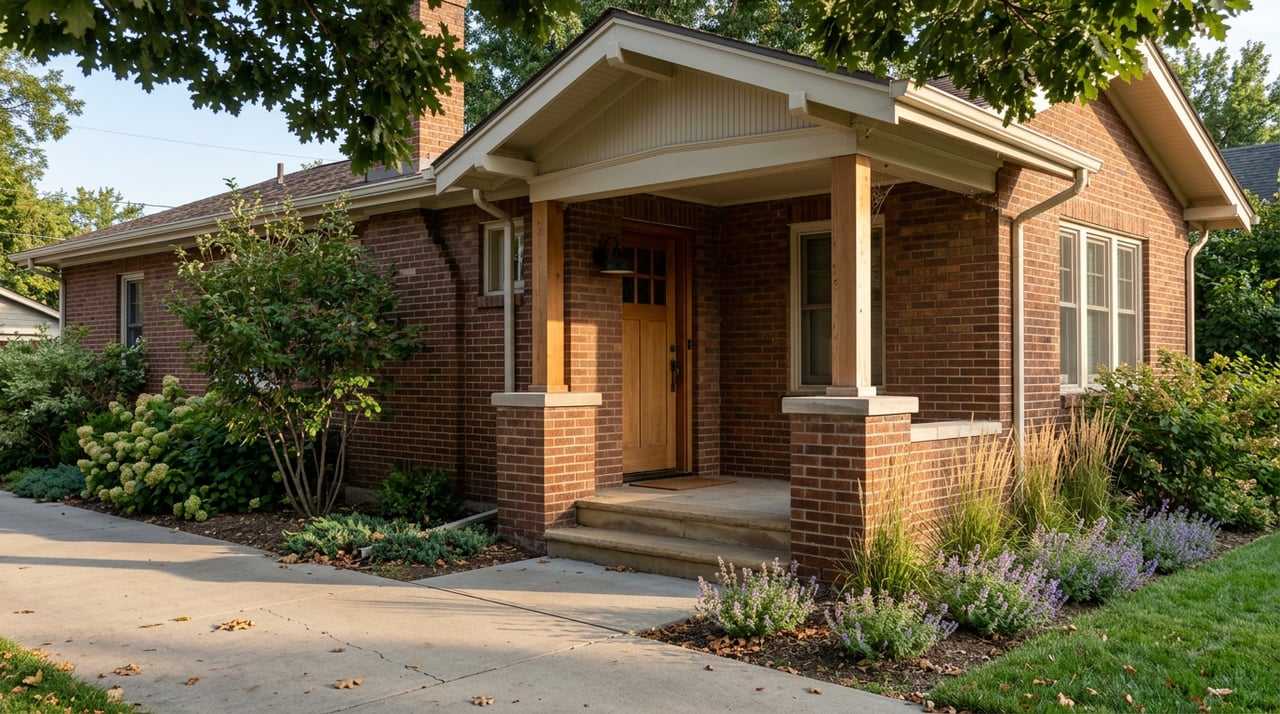
- Low-pitched gabled roof with wide eaves and exposed rafters.
- Tapered or square porch columns on piers and strong porch presence.
- Emphasis on hand-crafted wood details and honest materials.
Inside layout cues
- Built-ins such as bookcases or benches, and a fireplace with tile or brick.
- Open but still defined living and dining spaces.
- Natural wood trim and wainscoting.
Materials to expect
- Wood clapboard and shingles, often in upper gables.
- Brick porch piers and stained wood doors and trim.
What to check on inspection
- Porch supports and pier foundations for movement or moisture.
- Exposed rafter tails and deep eaves for rot, paint failure, or pests.
- Fireplace and flue condition, and roof-to-wall transitions under wide eaves.
Tudor Revival: features and checks
How to spot it
- Steeply pitched gables and asymmetrical facades.
- Decorative half-timbering set into stucco.
- Tall, narrow grouped windows and arched or recessed entries; prominent chimneys.
Inside layout cues
- Cozy rooms with nooks and angled walls.
- Leaded or casement windows in original examples.
- Heavier wood trim and a more intimate feel than open plans.
Materials to expect
- Stucco with half-timbering, brick or stone accents.
- Original roofs may be slate or composition.
What to check on inspection
- Stucco cracks and flashing where rooflines meet walls.
- Chimney masonry and fireplace liners for safety and draft.
- Window type and condition, especially if original casements were replaced.
Mediterranean/Spanish Revival: features and checks
How to spot it
- Low-pitched red tile roofs or simulated tile.
- Arched doors and windows, stucco walls, and decorative ironwork or tile.
- Mission-style influences and smaller hybrid forms are common in Denver.
Inside layout cues
- Arched interior passages and plaster walls.
- Decorative tile in entries or baths, and terraces where lots allow.
Materials to expect
- Stucco exteriors and clay tile roofs that are heavy and require solid structure.
- Wrought iron details at railings or balconies.
What to check on inspection
- Roof structure sized for the weight of clay tile.
- Stucco condition, including weep and drainage details.
- Waterproofing and flashing at arches, balconies, and roof edges.
Preserving character vs. costly shortcuts
Signs of quality updates
- Original windows and trim repaired and weatherstripped, with storms for efficiency.
- Plaster, hardwood floors, built-ins, and period hardware restored rather than replaced.
- Mechanical upgrades that thread through the house with minimal impact to historic finishes.
- Additions that sit back from the front, respect rooflines, and match window rhythm and scale.
Red flags for character loss
- Original windows swapped for flush vinyl units that change trim profiles.
- Synthetic siding placed over wood trim or masonry that hides detail.
- Gut renovations that remove built-ins, mantels, or plaster moldings without salvage.
- Roofline changes or full second-story additions that alter the home’s proportions.
Practical trade-offs to weigh
- Energy savings versus character: restoring windows can cost more up front but preserves value. Full replacement may be cheaper short-term but can affect historic appeal.
- Open-plan desires versus original flow: partial openings or reversible changes can improve function while maintaining defining walls and features.
Smart buying and inspections in Cheesman Park
Pre-offer research
- Check whether the property is a designated Denver landmark or within a local historic district. Designation can change what exterior work requires review.
- Review permit history and renovation records to understand past additions or system upgrades.
Inspections to order
- Standard home inspection for structure, roof, and major systems.
- Sewer scope for older laterals that may need repair.
- Chimney and fireplace inspection for liner and masonry condition.
- Electrical review for knob-and-tube or ungrounded wiring.
- Plumbing check for galvanized supply, lead service lines, or cast-iron drains.
- Radon testing, since parts of Colorado show elevated levels.
- Pest inspection for wood-destroying organisms.
- Lead paint and asbestos evaluation if you plan to disturb original finishes.
Questions to ask
- Year built and the age of major systems like roof, HVAC, sewer, electrical, and windows.
- Whether permits were pulled for significant work and if historic approvals were needed.
- Any moisture, settling, or foundation repairs and whether structural walls were removed.
- If in a district, whether any exterior changes are pending or required.
Budget and timeline realities
- Plan for deferred maintenance, even in well-kept homes. System replacements or masonry work can be needed within the first 5 to 10 years.
- Preservation-minded repairs, such as window restoration or plaster repair, take time and skilled trades. They often cost more than modern replacements but can preserve value and appeal.
Rules and incentives basics
- Landmark or district properties typically require city review for exterior changes. Interiors are usually not reviewed unless specifically designated.
- Some renovation incentives exist for certain listed properties. Confirm eligibility with the city and your tax advisor before you plan the project.
Your next step
Every block around Cheesman Park tells a story through its architecture. When you know how to read style cues and spot smart updates, you can evaluate a home quickly and avoid costly surprises. If you want a guided tour of styles, renovation quality, and block-by-block nuance, reach out to Julie Winger to schedule a neighborhood consultation.
FAQs
What is a Denver Square in Cheesman Park?
- A Denver Square is a two-story, boxy house with a hipped roof and central dormer, usually with a front porch and a four-room-per-floor layout common to late 1890s–1930s construction.
Are original windows worth keeping in historic Denver homes?
- Often yes for long-term value: restoration with weatherstripping and storm windows can cost more up front but preserves character and appeal, while full replacements can lower maintenance but risk aesthetic loss.
What hidden costs are common in Cheesman Park historic homes?
- Foundation or settling fixes, plumbing and electrical upgrades, roof replacement for slate or tile, and water management at stucco or complex roof intersections are common higher-ticket items.
Which energy upgrades suit historic homes best?
- Attic insulation, properly sized efficient heating, repaired and weather-stripped original windows, quality storm windows, and carefully planned wall or basement insulation that manages moisture.
Do I need approval for exterior changes in Cheesman Park?
- If the home is a local landmark or inside a designated historic district, many exterior changes require review by Denver’s Landmark Preservation staff; confirm status and process before planning work.