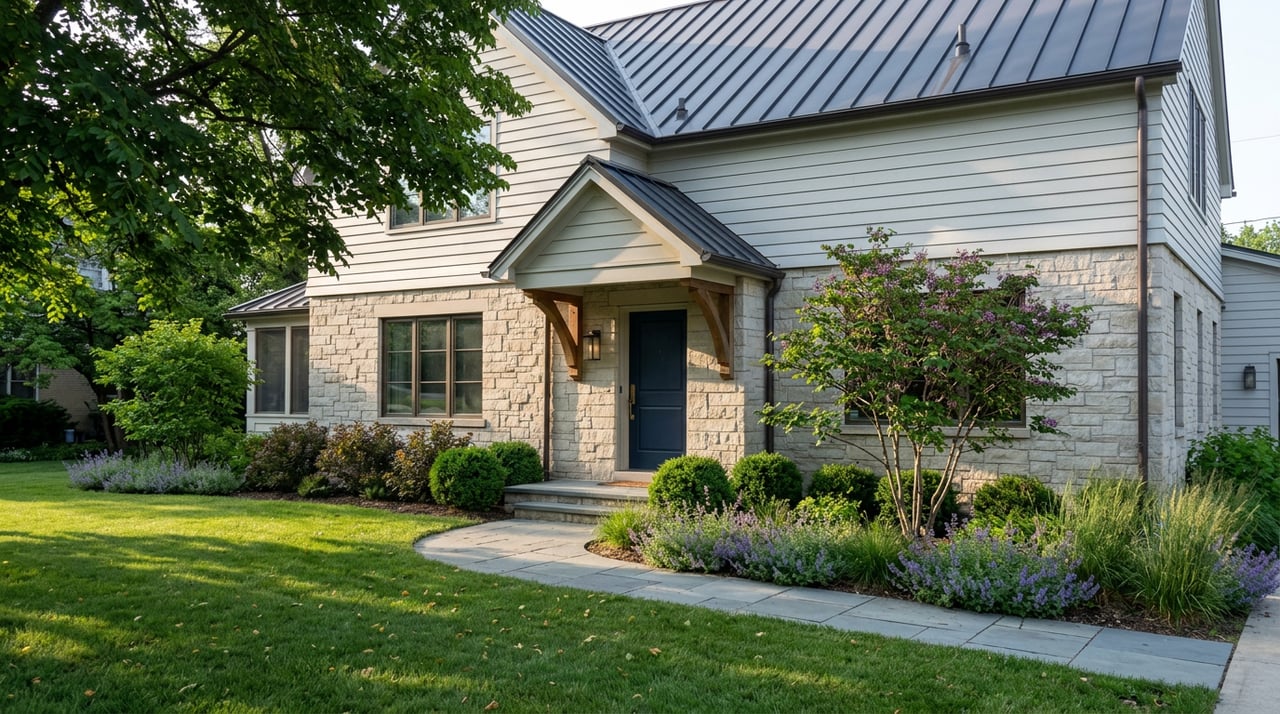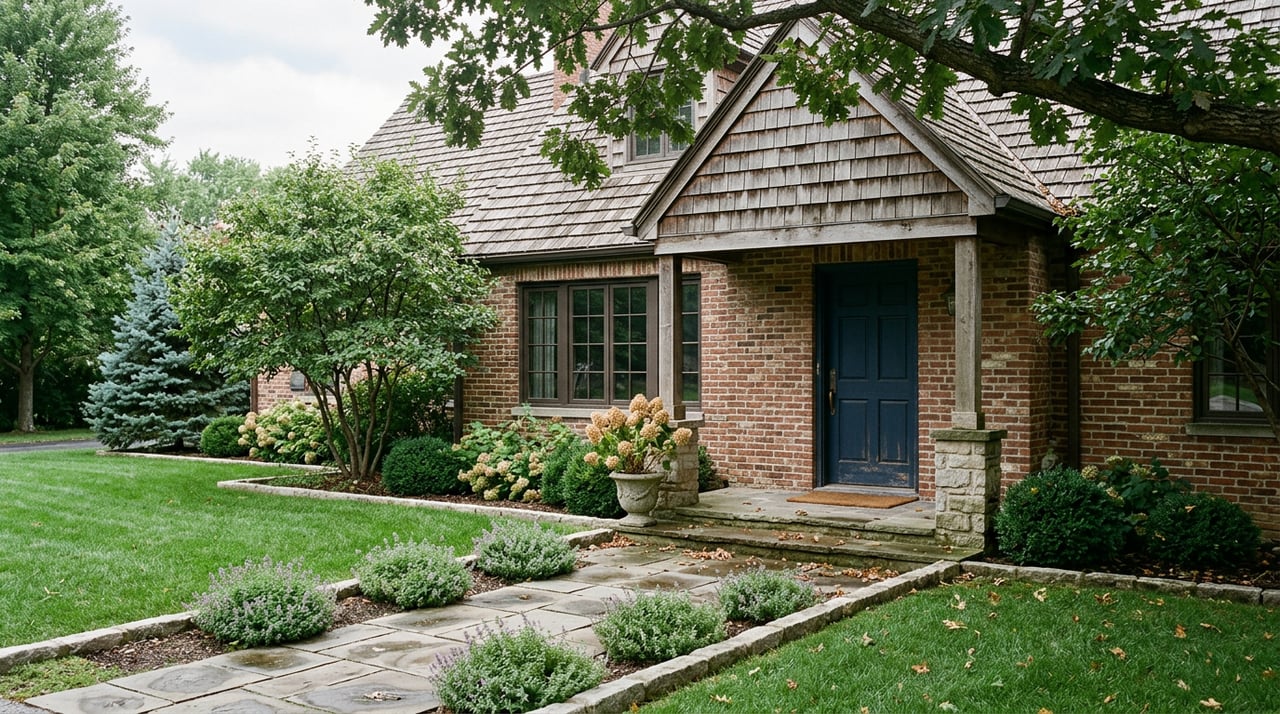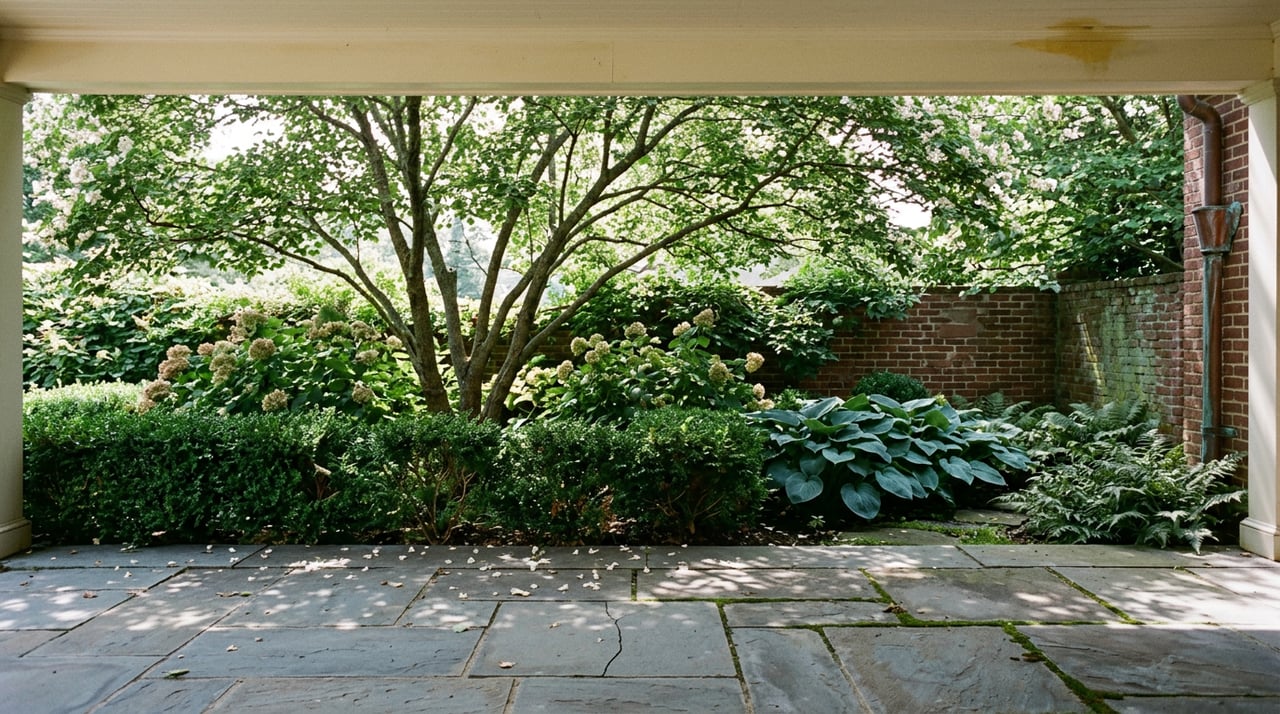
Stand on a porch on Race Street or Elizabeth Street on a Tuesday evening in August and you will not hear a landscaping crew, a clubhouse pool announcement, or traffic cutting through to somewhere else. Morgan's Historic District has none of that. It has no cut-through streets to begin with. What it has is a few dozen century-old houses tucked into a pocket bounded by Cheesman Park to the west, Congress Park to the east, East 8th Avenue to the south, and Denver Botanic Gardens to the north.
That boundary description is not scenery. It is the whole argument for how this neighborhood actually functions, and it is the part most write-ups skip past on their way to talking about brick and Tudor rooflines. Morgan's does not generate its own summer. It borrows one, in pieces, from three separate institutions that have never had a reason to coordinate with each other or with the neighborhood between them.
Three Landlords, No Lease
Morgan's is governed by a Registered Neighborhood Organization, not a homeowners association. That distinction matters more than it sounds. The RNO structure means the neighborhood has a voice at planning hearings and a way for residents to talk to each other, but it does not collect dues, run a clubhouse, or program a social calendar. There is no pool fee line item, no HOA newsletter announcing a summer concert series, because there is no internal amenity to manage in the first place.
Compare that to a neighborhood with its own retail spine or a private recreation center, where the sense of place gets built from the inside. Morgan's has no commercial strip of its own. What it has instead is proximity to three institutions that each run their own independent calendar: the City and County of Denver's parks department, which owns and programs Congress Park and Cheesman Park as public land, and Denver Botanic Gardens, a private nonprofit that charges admission and sells concert tickets on its own terms. None of the three answers to the neighborhood. All three happen to be a five-minute walk from it.
What July Already Proved
The pattern showed up on schedule this summer, the way it does most years. On July 5, the Denver Municipal Band, a concert band founded in 1861, played a patriotic program at The Pavilion at Cheesman Park as part of an annual festival sponsored by Capitol Hill United Neighborhoods. Twelve days later, on July 17, the Denver Philharmonic Orchestra brought a chamber ensemble to the same pavilion for a free lawn concert, with pavilion seating running ten dollars. Then, on July 25 and 26, the 13th annual Cheesman Park Art Fest filled the park's south side with more than 150 juried artists and craftspeople, a production Dash Events has run since 2013 with zero commercial booths allowed.
Three events, three organizers, one park, and not one of them headquartered inside Morgan's own six or so blocks. A resident who wanted to attend all three did not need a neighborhood email blast to find out. The calendar assembled itself, the way it has for years, because the park next door has become one of the more heavily programmed public spaces in central Denver whether the houses backing up to it get a say or not.
The Pool and Playground Nobody Here Had to Fund
Walk the other direction, toward Congress Park proper, and the same pattern shows up with a different funding source. The Congress Park Pool reopened in August 2022 after a $10.1 million reconstruction, replacing a 70-year-old facility that had grown too costly to keep patching. Day passes start at $3.50 for adults, a season pass runs $50, and in past seasons the pool has stayed open seven days a week into mid-August. None of that $10.1 million came from an assessment on the houses in Morgan's. It came from the Elevate Denver bond, a citywide infrastructure package Denver voters approved in 2017, meaning residents a block away get an institutional-grade pool without ever seeing a line item for it.
The playground tells the same story with a different mascot. The expanded children's playground, funded through the same bond program, debuted with a woodsy theme built around a climbable giant acorn, log stumps of varying heights, and a large sphere-shaped spinner big enough for several kids at once. A separate sand play area was set apart from the climbing structures specifically to give younger children a quieter spot. It is the kind of amenity a newer planned community might build into an HOA fee. Here, it exists because the city funded it as public infrastructure, and Morgan's happens to sit close enough to use it as if it were private.
What's Actually on the Calendar Tonight
The pattern is still running as of this week. Denver Botanic Gardens has a current art exhibition open through September 7, 2026, giving residents a few more weeks before it closes. The Gardens' Summer Concert Series has also kept booking through August, with Gregory Porter performing tonight, August 10, followed by Steel Pulse the next night, Trombone Shorty and Orleans Avenue on August 12, and Sam Bush with Paul Hoffman closing out the run on August 17.
This is where the three-institution pattern gets interesting instead of just busy. Cheesman Park's programming this summer was free or nearly free, run by a city parks department and volunteer arts producers. Congress Park's pool and playground were paid for once, up front, by a citywide bond. Denver Botanic Gardens is a private nonprofit that sells tickets to its concerts and charges admission to its galleries. Three different institutions, three different funding models, and Morgan's sits at the point where all three overlap without belonging to any of them.
What This Actually Means If You're Here
None of this is a complaint. A resident of Morgan's gets a summer's worth of programming that a neighborhood with its own private clubhouse would have to build and maintain itself, and gets it without a special assessment. But it is worth being clear-eyed about what that arrangement actually is. The amenity value of living in these few blocks is not attached to the property lines. It is attached to a map, and a map depends on three outside institutions continuing to fund and program the spaces around it the way they have been. Denver's parks budget, the Elevate Denver bond cycle, and Denver Botanic Gardens' own nonprofit finances are the actual mechanism behind what feels, from a porch on Race Street, like a neighborhood with an unusually full calendar.
That is a different kind of stability than an HOA reserve fund, and a different kind of risk profile too. It has held for years. Understanding why it holds, and what would have to change for it not to, is the kind of thing worth knowing before you assume the calendar just comes with the address.
If you're curious what a summer like this looks like from inside one of Morgan's historic houses, or you're weighing this pocket against other central Denver blocks with a similar mix of history and access, Julie Winger has spent years walking these streets with buyers and sellers who wanted more than a listing sheet. Schedule a neighborhood consultation and get the version of this story that applies to your specific block.